Changing history
Just shy of 11 years ago, I released a book with Jeremy Watterson about baseball in Montana. The book’s structure was blissfully straightforward: profiling the professional ball players who were born or buried in Montana, along with some chapters on professional leagues that called Big Sky Country home over the last 150 years or so. Rigorous research from baseball’s most respected sources helped us reliably sharpen the focus of the book’s list of subjects1, as well as glean details about their lives and careers, both on and off the field. That means we pulled from the Society for American Baseball Research (SABR), Baseball Reference, the Baseball Hall of Fame Museum and Library, Retrosheet, the Library of Congress, hundreds of local and national publications, the Montana Historical Society, and more.
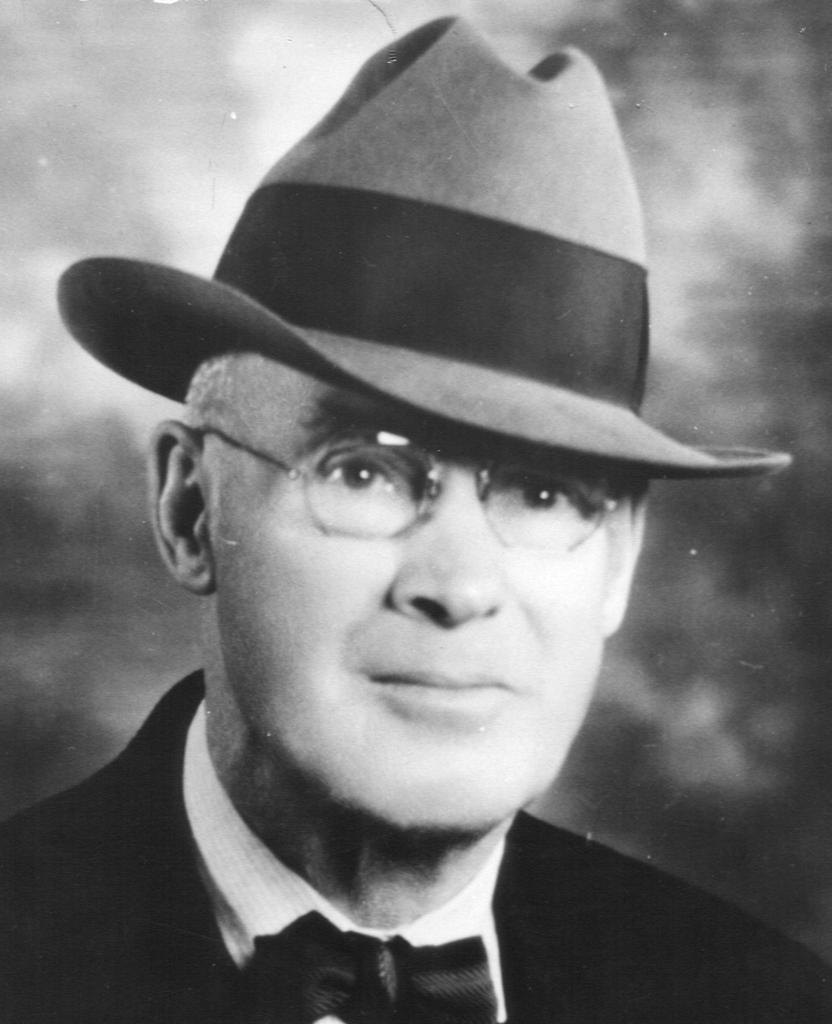
This week I received an email about one of the men profiled in Montana Baseball History: Wyman Andrus, who we labeled “Montana’s Moonlight Graham,” considering he played a single game of professional baseball in 1885 for the Providence Grays before abandoning his otherwise semi-pro hardball pursuits to become a celebrated doctor and, later, a popular Montana politician. Our writeup, which was later republished by SABR, noted that despite Andrus’ many accomplishments, he was perhaps best known for being the first person in Miles City, Montana, to own an automobile.
“Hello. I’m a fellow member of SABR, and I help update the biographical information of current and former major league players, etc., on Retrosheet’s website,” the email began. “The most recent newsletter from this committee (attached) contains information about Wyman Andrus … Per the Biographical Committee’s newsletter, new research has determined that Andrus did not play for the Grays – the player in the 1885 Gray’s game mistakenly identified as Andrus was actually William Walter Andrews. Based on this new information, Wyman Andrus will be removed from Retrosheet’s website since it turns out that he was not a former major league player.”
The email went on to encourage us to update Andrus’ bio in the other places it appears, most notably within SABR’s Bio Project. (The physical book will be a little harder to correct, but we’ll be sure to do so in that imminent second edition, wink wink.)
In an instant, Andrus went from Moonlight Graham—the reverential Field of Dreams character based on an actual one-game-and-done big leaguer—to just another almost-was ball player. The steady hum of his career in Canadian and secondary American leagues still resonates without objection, but the crescendo of his one game with Providence has been erased.
I find this revelation surprisingly heartening for two reasons.
First, what a testament to baseball nerds! Here we are, 141 years later, cleaning up the record books in the name of accuracy. If only the rest of society could be held to such standards.
Second, by erasing the pinnacle of Andrus’ baseball achievements, it only amplifies his accomplishments beyond the ball field. By all accounts, Andrus was revered in his various communities, stretching across countries, trades and hobbies.
Sporting Life wrote about him in December 1895, calling him “one of the best-known and most popular of Canadian base ball players of a few years ago … Everyone knew Andy in the days of the old International and Canadian Leagues. … His great forte was in run-getting. He was a terrific hitter and base-runner, and, thanks to a careful mode of living, is still in the front ranks of the diamond. … and is now a flourishing physician in Myles [sic] City, Montana.”
That “careful mode of living” helped the Republican serve five successive terms as mayor in Miles City before spending two more terms representing Custer County in the state legislature. He umpired local games and served as president of the Miles City ball club, but he was also president of the Montana State Medical Association and served as the surgeon for Northern Pacific Railway. Baseball was just a fraction of his full story. In fact, to some the game—the one in Providence or otherwise—hardly mattered at all.
“Among the many eminent names to be found in the rolls of Montana’s professional men, none is more worthy of mention than that of William Wiman Andrus,” wrote Helen Fitzgerald Sanders in the 1913 collection, A History of Montana. “A man of scholarly tastes and able to throw light on almost any subject connected with his profession, yet drawing from a fund of rich experience and ripened knowledge, Dr. Andrus is also a man of rare sympathy, great kindness of heart and magnetic personality.”
- I still remember Jeremy handing me a printed out list from Baseball Reference showing the 19 former MLB players buried in Montana and suggesting we write about them; I’m pretty sure he did this in our dugout during one of our Sandlot-like weekend pickup games on Missoula’s north side. ↩︎
 SkylarBrowning.com
Leave a comment